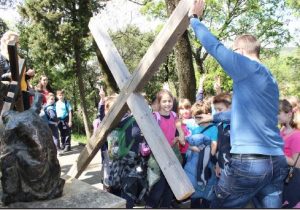
What Youth for Christ is Doing
Youth for Christ is involved in many ministries to reach youth, to include leadership training, providing resources to churches and individuals, ministry models, clubs, youth meetings, service projects, schoolwork, and volunteer training.
Prayer Needs
- Spiritual growth of youth who have come to Jesus.
- Further development of the local ministry in Rijeka.
- Further development of the scholarship program for the needy in Vukovar.
- Adequate resources and funding for additional staff and volunteers.
- Continued effectiveness of ministry teams in the country.
About Croatia
Croatia
Introduction
The lands that today comprise Croatia were part of the Austro-Hungarian Empire until the close of World War I. In 1918, the Croats, Serbs, and Slovenes formed a kingdom known after 1929 as Yugoslavia. Following World War II, Yugoslavia became a federal independent Communist state under the strong hand of Marshal TITO. Although Croatia declared its independence from Yugoslavia in 1991, it took four years of sporadic, but often bitter, fighting before occupying Serb armies were mostly cleared from Croatian lands. Under UN supervision, the last Serb-held enclave in eastern Slavonia was returned to Croatia in 1998. In April 2009, Croatia joined NATO; it is a candidate for eventual EU accession.
Geography
Location
Location: Southeastern Europe, bordering the Adriatic Sea, between Bosnia and Herzegovina and Slovenia
Geographic Coordinates: 45 10 N, 15 30 E
Area
Total Area: 56,594 sq km Rank: 126
Land Area: 55,974 sq km
Water Area: 620 sq km
Comparison: slightly smaller than West Virginia
Land Boundaries: 1,982 km
Bordering Countries: Bosnia and Herzegovina 932 km, Hungary 329 km, Serbia 241 km, Montenegro 25 km, Slovenia 455 km
Coastline: 5,835 km (mainland 1,777 km, islands 4,058 km)
Climate
Mediterranean and continental; continental climate predominant with hot summers and cold winters; mild winters, dry summers along coast
Terrain
geographically diverse; flat plains along Hungarian border, low mountains and highlands near Adriatic coastline and islands
Elevations
Lowest Point: Adriatic Sea 0 m
Highest Point: Dinara 1,830 m
Natural Resources
oil, some coal, bauxite, low-grade iron ore, calcium, gypsum, natural asphalt, silica, mica, clays, salt, hydropower
Land Use
Arable land: 25.82%
Permanent Crops: 2.19%
Other: 71.99% (2005)
Irrigated Land: 110 sq km (2003)
Renewable Water Resources: 105.5 cu km (1998)
Environment
Natural Hazards: destructive earthquakes
Environmental Issues: air pollution (from metallurgical plants) and resulting acid rain is damaging the forests; coastal pollution from industrial and domestic waste; landmine removal and reconstruction of infrastructure consequent to 1992-95 civil strife
Environmental Agreements: Party to: Air Pollution, Air Pollution-Nitrogen Oxides, Air Pollution-Persistent Organic Pollutants, Air Pollution-Sulfur 94, Air Pollution-Volatile Organic Compounds, Biodiversity, Climate Change, Climate Change-Kyoto Protocol, Desertification, Endangered Species, Hazardous Wastes, Law of the Sea, Marine Dumping, Ozone Layer Protection, Ship Pollution, Wetlands, Whaling
Geography Notes
controls most land routes from Western Europe to Aegean Sea and Turkish Straits; most Adriatic Sea islands lie off the coast of Croatia - some 1,200 islands, islets, ridges, and rocks
People
Population: 4,489,409 (July 2010 est.) Rank: 121
Age Structure
0-14 years: 15.6% (male 358,360/female 340,098)
15-64 years: 67.5% (male 1,506,364/female 1,522,789)
65 years and over: 17% (male 295,960/female 465,838) (2010 est.)
Median Age: 39.3 years
Population Growth
Growth Rate: -0.052% (2010 est.) Rank: 209
Birth Rate: 9.64 births/1,000 population (2010 est.) Rank: 201
Death Rate: 11.75 deaths/1,000 population (July 2010 est.) Rank: 38
Net Migration Rate: 1.59 migrant(s)/1,000 population (2010 est.) Rank: 47
Urbanization
Urban Population: 57% of total population (2008)
Rate of Urbanization: 0.4% annual rate of change (2005-10 est.)
Life and Death
Infant Mortality Rate: 6.37 deaths/1,000 live births Rank: 178
Life Expectancy at Birth: 75.35 years Rank: 80
Fertility Rate: 1.43 children born/woman (2010 est.) Rank: 191
Health and Disease
HIV/AIDS - Adult Prevalence Rate: less than 0.1% (2007 est.) Rank: 165
People living with HIV/AIDS: 200 (2007 est.) Rank: 160
HIV/AIDS Deaths: fewer than 10 (2001 est.) Rank: 154
Degree of Risk for Major Infectious Diseases: intermediate
Food or waterborne diseases: bacterial diarrhea
Vectorborne Diseases: tickborne encephalitis
note:
highly pathogenic H5N1 avian influenza has been identified in this country; it poses a negligible risk with extremely rare cases possible among US citizens who have close contact with birds
(2009)
Nationality and Culture
Noun: Croat(s), Croatian(s)
Adjective: Croatian
Ethnic Groups: Croat 89.6%, Serb 4.5%, other 5.9% (including Bosniak, Hungarian, Slovene, Czech, and Roma) (2001 census)
Religion: Roman Catholic 87.8%, Orthodox 4.4%, other Christian 0.4%, Muslim 1.3%, other and unspecified 0.9%, none 5.2% (2001 census)
Languages: Croatian 96.1%, Serbian 1%, other and undesignated 2.9% (including Italian, Hungarian, Czech, Slovak, and German) (2001 census)
Education
Literacy (Meaning, age 15 and over can read and write): 98.1% Male: 99.3% Female: 97.1% (2001 census)
School life expectancy (primary to tertiary education): 14 years Male: 13 years Female: 14 years (2006)
Education expenditures: 4.5% of GDP (2004) Rank: 87
Government
Country Name
Conventional Long Form: Republic of Croatia
Conventional Short Form: Croatia
Local Long Form: Republika Hrvatska
Local Short Form: Hrvatska
Formerly: People's Republic of Croatia, Socialist Republic of Croatia
Government Type: presidential/parliamentary democracy
Capital: Zagreb Geographic Coordinates: 45 48 N, 16 00 E
Administrative divisions
20 counties (zupanije, zupanija - singular) and 1 city* (grad - singular); Bjelovarsko-Bilogorska, Brodsko-Posavska, Dubrovacko-Neretvanska (Dubrovnik-Neretva), Istarska (Istria), Karlovacka, Koprivnicko-Krizevacka, Krapinsko-Zagorska, Licko-Senjska (Lika-Senj), Medimurska, Osjecko-Baranjska, Pozesko-Slavonska (Pozega-Slavonia), Primorsko-Goranska, Sibensko-Kninska, Sisacko-Moslavacka, Splitsko-Dalmatinska (Split-Dalmatia), Varazdinska, Viroviticko-Podravska, Vukovarsko-Srijemska, Zadarska, Zagreb*, Zagrebacka
Independence: 25 June 1991 (from Yugoslavia)
National holiday: Independence Day, 8 October (1991); note - 25 June 1991 was the day the Croatian parliament voted for independence; following a three-month moratorium to allow the European Community to solve the Yugoslav crisis peacefully, Parliament adopted a decision on 8 October 1991 to sever constitutional relations with Yugoslavia
Constitution: adopted on 22 December 1990; revised 2000, 2001
Legal system: based on Austro-Hungarian law system with Communist law influences; has not accepted compulsory ICJ jurisdiction
Suffrage: 18 years of age, 16 if employed; universal
Executive Branch
Chief of State: President Ivo JOSIPOVIC (since 18 February 2010)
Head of Government: Prime Minister Jadranka KOSOR (since 6 July 2009); Deputy Prime Ministers Bozidar PANKRETIC (since 6 July 2009), Darko MILINOVIC (since 13 November 2009), Ivan SUKER (since 13 November 2009), Djurdja ADLESIC (since 12 January 2008), Slobodan UZELAC (since 12 January 2008)
Cabinet: Council of Ministers named by the prime minister and approved by the parliamentary assembly
Elections: president elected by popular vote for a five-year term (eligible for a second term); election last held on 10 January 2010 (next to be held in December 2015); the leader of the majority party or the leader of the majority coalition usually appointed prime minister by the president and then approved by the assembly
Election Results: Ivo JOSIPOVIC elected president; percent of vote in the second round - Ivo JOSIPOVIC 60%, Milan BANDIC 40%
Legislative Branch
unicameral Assembly or Sabor (153 seats; members elected from party lists by popular vote to serve four-year terms)
Elections: last held on 25 November 2007 (next to be held by November 2011)
Election Results: percent of vote by party - NA; number of seats by party - HDZ 66, SDP 57, HNS 6, HSS 6, HDSSB 3, IDS 3, SDSS 3, other 9
Judicial branch
Supreme Court; Constitutional Court; judges for both courts are appointed for eight-year terms by the Judicial Council of the Republic, which is elected by the Assembly
Politics
Political Parties and Leaders: Croatian Democratic Congress of Slavonia and Baranja or HDSSB [Vladimir SISLJAGIC]; Croatian Democratic Union or HDZ [Jadranka KOSOR]; Croatian Party of the Right or HSP [Anto DJAPIC]; Croatian Peasant Party or HSS [Josip FRISCIC]; Croatian Pensioner Party or HSU [Silvano HRELJA]; Croatian People's Party or HNS [Radimir CACIC]; Croatian Social Liberal Party or HSLS [Darinko KOSOR]; Independent Democratic Serb Party or SDSS [Vojislav STANIMIROVIC]; Istrian Democratic Assembly or IDS [Ivan JAKOVCIC]; Social Democratic Party of Croatia or SDP [Zoran MILANOVIC]
Political pressure groups and leaders: human rights groups
International Organization Participation: ACCT (observer), Australia Group, BIS, BSEC (observer), CE, CEI, EAPC, EBRD, FAO, IADB, IAEA, IBRD, ICAO, ICC, ICCt, ICRM, IDA, IFAD, IFC, IFRCS, IHO, ILO, IMF, IMO, IMSO, Interpol, IOC, IOM, IPU, ISO, ITSO, ITU, ITUC, MIGA, MINURCAT, MINURSO, MINUSTAH, NAM (observer), NATO, NSG, OAS (observer), OIF (observer), OPCW, OSCE, PCA, SECI, UN, UNCTAD, UNDOF, UNESCO, UNFICYP, UNIDO, UNIFIL, UNMIL, UNMIS, UNMOGIP, UNWTO, UPU, WCO, WFTU, WHO, WIPO, WMO, WTO, ZC
Flag Description: three equal horizontal bands of red (top), white, and blue - the Pan-Slavic colors - superimposed by the Croatian coat of arms; the coat of arms consists of one main shield (a checkerboard of 13 red and 12 silver (white) fields) surmounted by five smaller shields that form a crown over the main shield; the five small shields represent five historic regions, they are (from left to right): Croatia, Dubrovnik, Dalmatia, Istria, and Slavonia
Economy
Economy Overview: Once one of the wealthiest of the Yugoslav republics, Croatia's economy suffered badly during the 1991-95 war as output collapsed and the country missed the early waves of investment in Central and Eastern Europe that followed the fall of the Berlin Wall. Between 2000 and 2007, however, Croatia's economic fortunes began to improve slowly, with moderate but steady GDP growth between 4% and 6% led by a rebound in tourism and credit-driven consumer spending. Inflation over the same period has remained tame and the currency, the kuna, stable. Nevertheless, difficult problems still remain, including a stubbornly high unemployment rate, a growing trade deficit and uneven regional development. The state retains a large role in the economy, as privatization efforts often meet stiff public and political resistance. While macroeconomic stabilization has largely been achieved, structural reforms lag because of deep resistance on the part of the public and lack of strong support from politicians. The EU accession process should accelerate fiscal and structural reform. While long term growth prospects for the economy remain strong, Croatia will face significant pressure as a result of the global financial crisis. Croatia's high foreign debt, anemic export sector, strained state budget, and over-reliance on tourism revenue will result in higher risk to economic stability over the medium term.
Gross Domestic Product
GDP (purchasing power parity): $78.57 billion (2009 est.) Rank: 76
GDP - real growth rate: -5.8% (2009 est.) Rank: 194
GDP - per capita (PPP): $17,500 (2009 est.) Rank: 68
GDP - Composition by Sector: Agriculture: 6.3% Industry: 28.1% Services: 65.6% (2009 est.)
Labor Force
Labor Force: 1.196 million (November 2009 est.) Rank: 137
Labor force - by occupation: Agriculture: 5% Industry: 31.3% Services: 63.6% (2008)
Unemployment Rate: 16.1% (2009 est.) Rank: 154
Poverty
Population below poverty line: 17% (2008)
$4.474 billion (31 December 2008 est.)
total: 29,248 km (includes 1,043 km of expressways) (2008)
country comparison to the world: 99
Transnational Issues
International Disputes: dispute remains with Bosnia and Herzegovina over several small sections of the boundary related to maritime access that hinders ratification of the 1999 border agreement; the Croatia-Slovenia land and maritime boundary agreement, which would have ceded most of Pirin Bay and maritime access to Slovenia and several villages to Croatia, remains unratified and in dispute; Slovenia also protests Croatia's 2003 claim to an exclusive economic zone in the Adriatic; as a European Union peripheral state, Slovenia imposed a hard border Schengen regime with non-member Croatia in December 2007
Want to know more? Show Full Profile
Explore YFC International
- EverYouth Drama Ministry » Evangelism Through Drama
- YFC Alumni Fellowship » Reconnect with old friends and the ministry of YFC.
- YFC Global Launch » Helping Young Leaders Achieve Their God-given Dreams!
- YFC University » Quality online courses on the Bible, Ministry, and the Christian Life.
- YFC Coaching » Assisting YFC Staff to grow and become more effective in bringing out the best in those around them.
- YFC World » STAFF ONLY